Maintenance5 min readBy Mike Calhoun
Spring Roof Inspection Checklist: 12 Things to Check Every Year
Winter takes a toll. Before the summer storms arrive, run through this 12-point inspection to catch small problems before they become big ones.
The best time to inspect your roof is spring — after winter's ice and snow, and before summer's thunderstorm season begins. This annual checkup can save you thousands.
Safety First
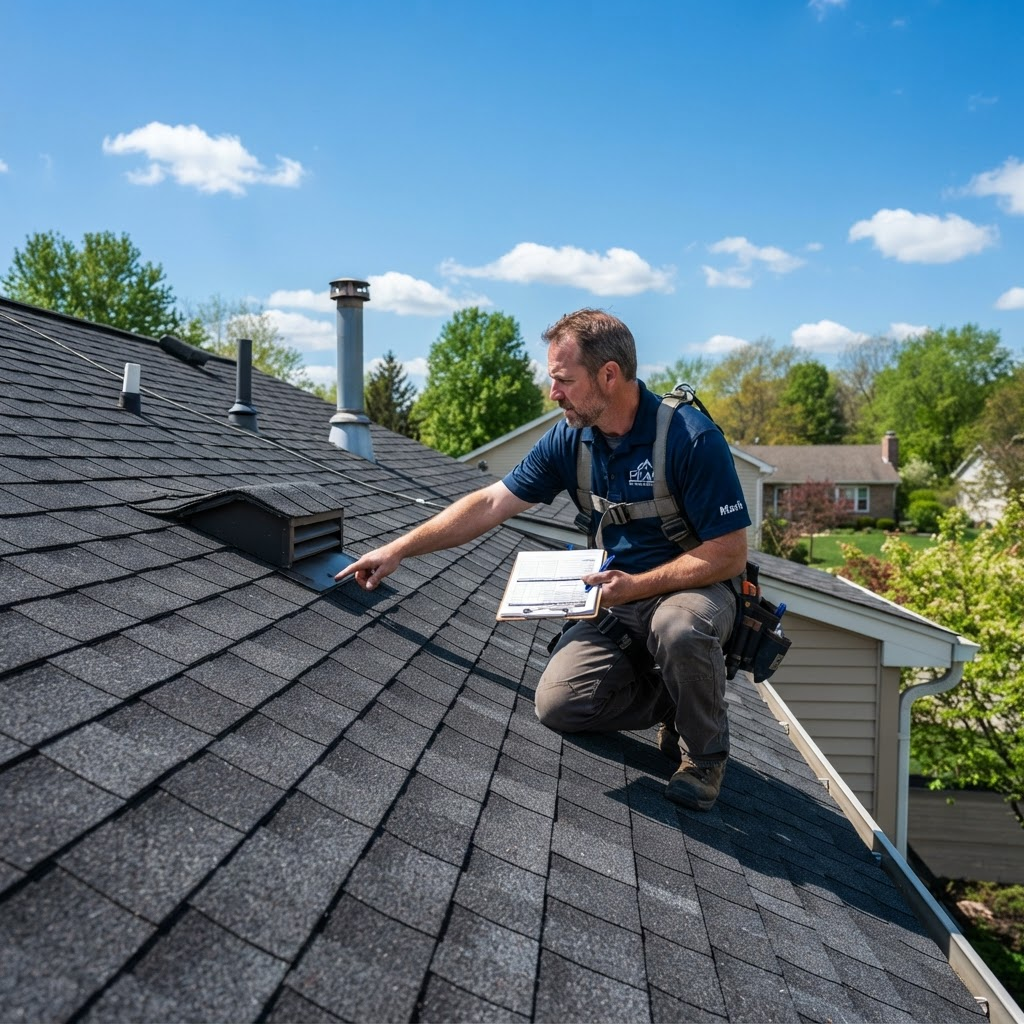
Never walk on a wet, steep, or fragile roof. Use binoculars from the ground for the initial scan. For close-up work, use a sturdy extension ladder and wear rubber-soled shoes.
Ground-Level Check (Binoculars)
- Missing or curling shingles — look for bare patches or shingles curling at the edges
- Granule loss — downspouts and gutters full of sandy granules signal aging shingles
- Sagging areas — any dip or wave in the roofline indicates decking damage
- Ridge cap condition — the peak should be straight and intact
Gutter Inspection
- Clean gutters and downspouts — blocked gutters cause ice dams and fascia rot
- Check for granules — heavy granule accumulation means shingles are nearing end of life
- Gutter attachment — make sure gutters are firmly secured to the fascia
Flashing Check
- Chimney flashing — look for gaps, rust, or separating caulk
- Vent pipe boots — rubber boots around pipes crack over time; replace if brittle
- Valley flashing — verify no raised or missing metal at roof valleys
Attic Inspection
- Ventilation check — ensure ridge and soffit vents are clear
- Moisture or mold — any dark staining on rafters means inadequate ventilation or active leaks
What to Do With What You Find
Minor issues (a few missing shingles, cracked caulk) are DIY-friendly. Widespread granule loss, multiple failing shingles, or attic mold warrant a professional assessment.