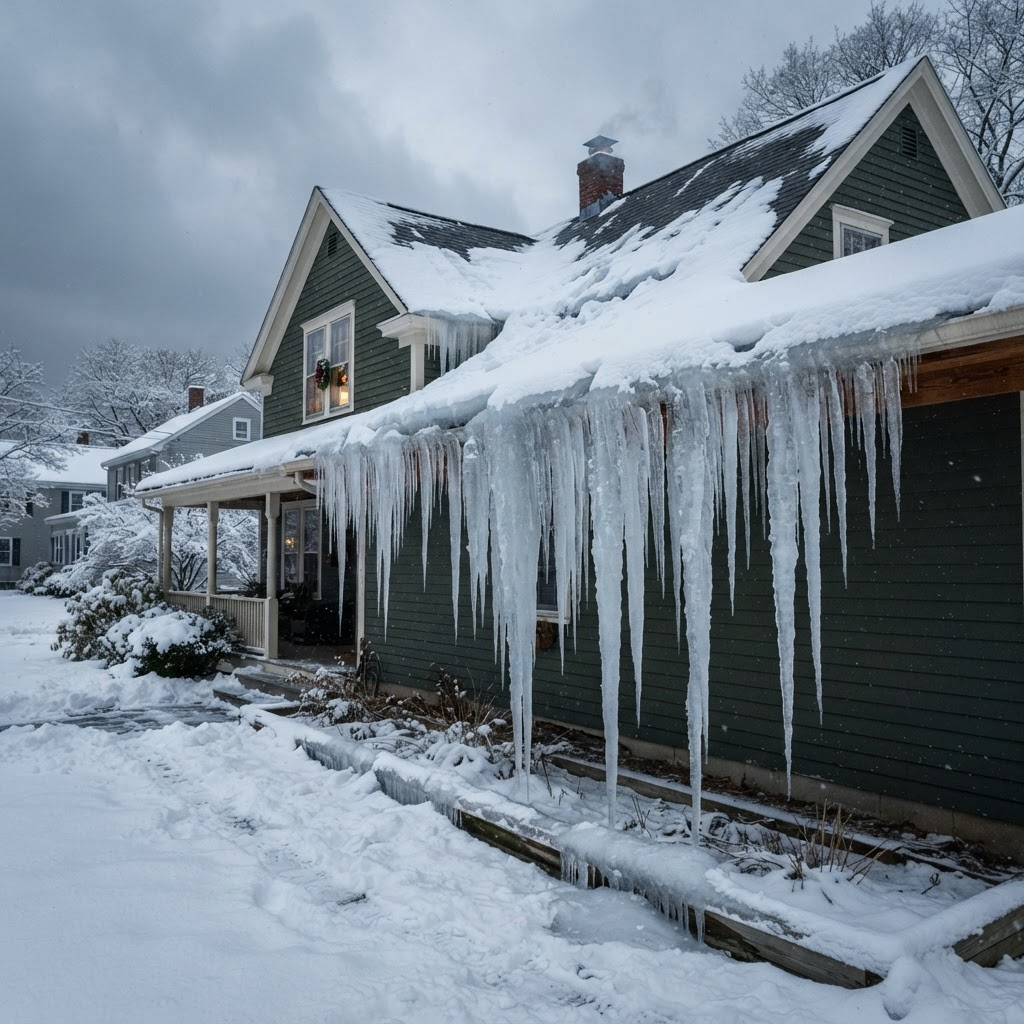
Ice Dams: How to Prevent, Remove, and Avoid the Damage
Ice dams are one of the most destructive winter roof problems. Learn what causes them, how to safely remove them, and — most importantly — how to stop them from forming.
Ice dams form when heat escaping through your roof melts snow, which then refreezes at the cold eaves — building a wall of ice that forces water under your shingles. They cause thousands of dollars of damage every year and are almost entirely preventable.
What Causes Ice Dams
The root cause is uneven roof temperature. A warm attic (from inadequate insulation or air sealing) heats the upper roof, melting snow. That meltwater flows to the cold eaves, refreezes, and the dam grows. Gutters can accelerate dam formation by collecting water.
Prevention — The Right Fix
1. Insulate the attic floor — A well-insulated attic keeps heat in your living space and off your roof. R-38 to R-60 is typical for cold climates.
2. Air seal the attic — Even perfectly thick insulation is undermined by air leaks from recessed lights, plumbing chases, and attic hatches. Seal every penetration before adding insulation.
3. Improve attic ventilation — A properly ventilated attic stays close to outside air temperature, eliminating the warm-roof problem entirely. Ensure adequate soffit and ridge vent area.
4. Install ice-and-water barrier — During a roof replacement, extend self-adhesive ice-and-water barrier membrane at least 24" inside the interior wall line, or as required by your local code.
Safe Removal
If dams have already formed:
- Roof rake — Use a long-handled aluminum rake to pull snow off the lower 4–6 feet of roof while standing on the ground.
- Calcium chloride — Fill a nylon stocking with calcium chloride ice melt (not rock salt, which damages shingles) and lay it perpendicular to the dam to melt a channel.
- Never chop or chip — Hacking at ice damages shingles and flashing.
Emergency Leak Response
If water is actively entering the home, move belongings, place buckets, and call a roofer. Do not attempt roof work during winter ice conditions.