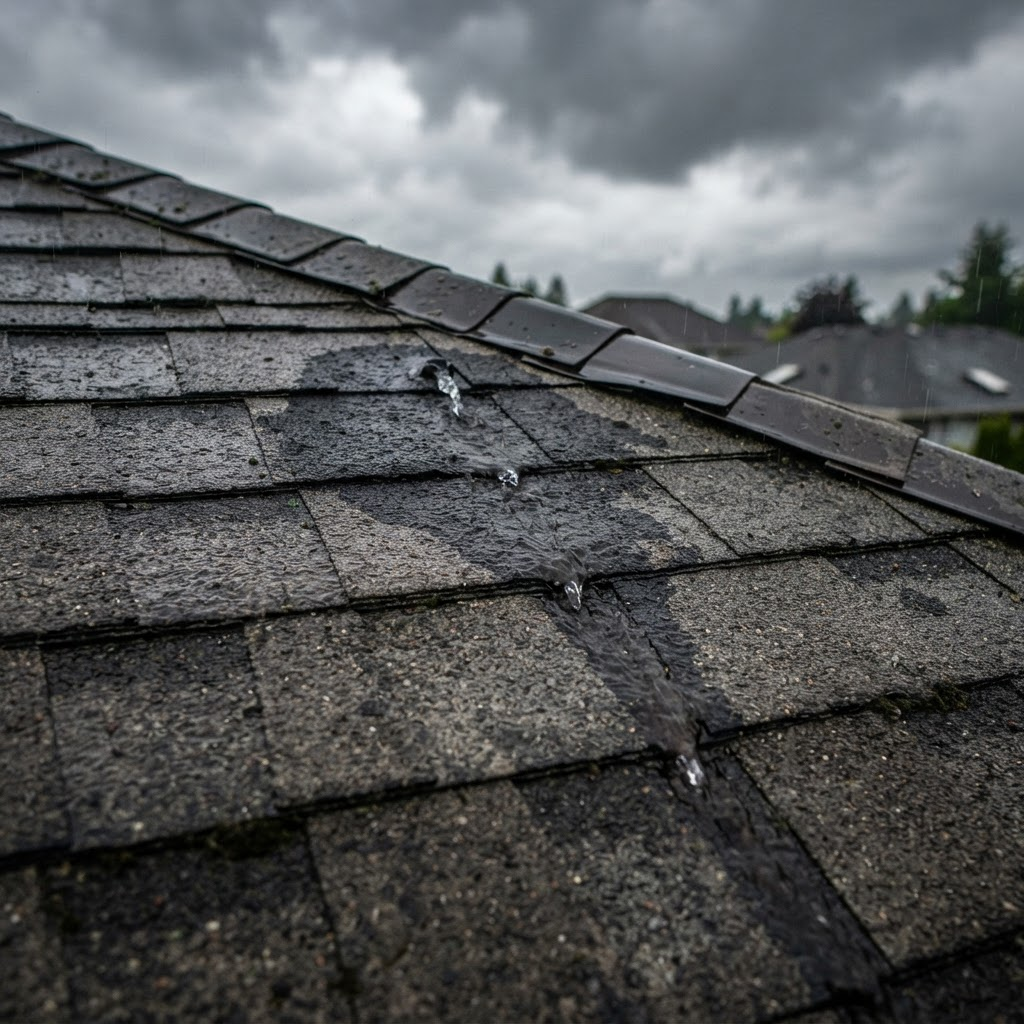
How to Find a Roof Leak (Even If You're Not a Pro)
Water stains on your ceiling but can't pinpoint the source? Here's a simple step-by-step method to trace a roof leak back to its origin — no experience required.
Water stains on your ceiling are a homeowner's nightmare — but finding the actual leak doesn't have to be. Most roof leaks travel far from their entry point before dripping down, which is why so many people patch the wrong spot.
Start in the Attic
Grab a flashlight and head up to your attic during or just after heavy rain. Look for:
- Wet insulation — discolored, matted, or soggy batts
- Daylight penetration — visible beams of light through the decking
- Staining or mold on rafters or sheathing
Follow the water trail uphill from the wet spot. Water enters higher up and runs down before dripping.
The Garden Hose Test
If you can't wait for rain, grab a helper and a garden hose. Have one person stay inside the attic while the other slowly soaks different sections of the roof from bottom to top. Soak each section for several minutes before moving higher. When the person inside calls out, you've isolated the zone.
Common Entry Points
Nine times out of ten, leaks originate at penetrations or transitions:
- Flashing around chimneys, skylights, and vents
- Valleys where two roof planes meet
- Ridge caps that have cracked or lifted
- Missing or cracked shingles
When to Call a Pro
If the leak is near the chimney, involves flashing, or you see widespread decking rot, it's time to call a licensed roofer. A patch fix won't cut it when the structural deck is compromised.